Onepilot agents
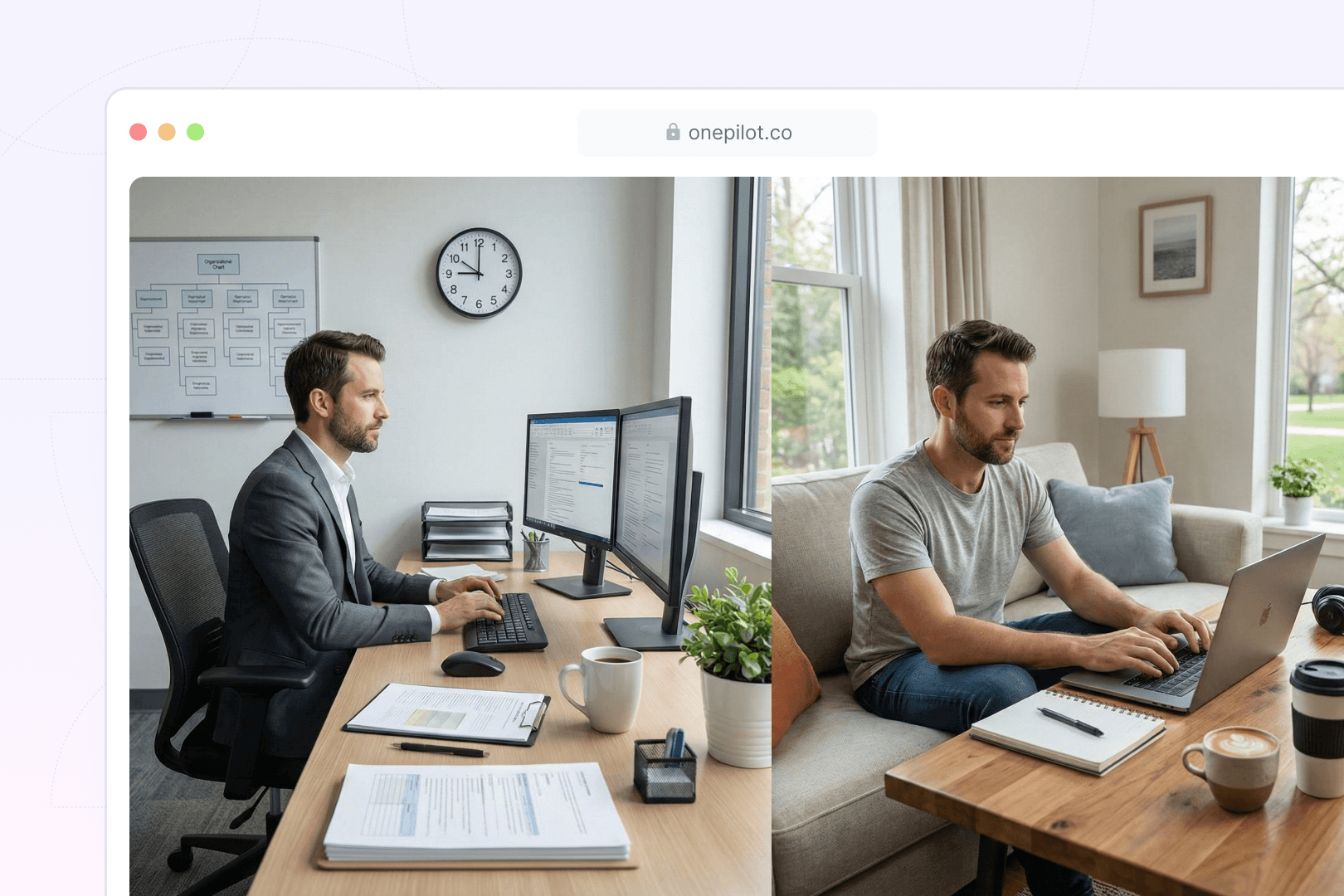
Freelancer vs Employee: Understanding Status, Income, and Key Differences
Choosing between staying an employee or starting as a freelance auto-entrepreneur is a common dilemma for customer support professionals. Each path has its advantages and trade-offs, from financial considerations to flexibility and security. This article breaks down the main differences, explains how to estimate your net monthly income, and introduces an interactive simulator to help you see your potential earnings as an auto-entrepreneur.
Why Compare Auto-Entrepreneur and Employee Status?
The decision between becoming a salaried employee or an auto-entrepreneur impacts more than just your paycheck. Here are the main areas to consider:
Legal and fiscal status: Employees operate under a labor contract, while auto-entrepreneurs are self-employed with simplified administrative obligations.
Income and social charges: Employees pay social contributions through payroll, while auto-entrepreneurs pay a fixed percentage of their revenue.
Flexibility and autonomy: Freelancing allows for full control over your schedule, clients, and projects, whereas salaried positions offer stability but less flexibility.
Protection and benefits: Employees enjoy paid leave, health coverage, and retirement contributions, while auto-entrepreneurs manage their own coverage.
Understanding these differences can guide professionals who want to make informed choices about career paths, especially in customer support where freelance opportunities are growing.
Key Differences Between Freelancer and Employee
The following table summarizes the main distinctions:
Criteria | Employee | Freelancer |
|---|---|---|
Social contributions | ~22-25% of gross salary | ~22% of turnover (micro-BNC/BIC) |
Income tax | Withholding / progressive | Pay-as-you-go or annual declaration |
Paid leave | 5 weeks/year | None |
Flexibility | Fixed schedule | Full control |
Job security | High | Variable, depends on contracts |
Administrative burden | Low | Medium (registration + reporting) |
Potential net income | Stable | Potentially higher, varies monthly |
This table provides a snapshot of the financial, administrative, and lifestyle differences. While employees enjoy security, auto-entrepreneurs gain autonomy and the potential for higher earnings if they manage their workload efficiently.
How to Calculate Your Net Monthly Income
Calculating your net income differs depending on your status.
For employees:
Start with gross salary.
Deduct social contributions (~22% for most contracts).
Deduct income tax (either withheld or declared annually).
For auto-entrepreneurs:
Revenue x applicable social contribution rate (~22%).
Optionally, deduct business-related costs if using micro-BNC/BIC rules.
Income tax can be paid monthly or annually depending on your choice.
Using our interactive net income simulator below, you can input your expected revenue as an auto-entrepreneur or your gross salary as an employee. The simulator will calculate your approximate net monthly income, giving you a clear comparison.
This tool is particularly useful for professionals in customer support who want to explore freelancing without losing visibility on financial outcomes.
Benefits of Freelancing as a Customer Support Professional
Freelancing offers specific advantages for customer support experts:
Flexibility: Set your own schedule and choose the volume of work.
Autonomy: Pick clients and projects that match your skills and interests.
Potentially higher net income: With control over your workload, you can optimize revenue.
Skill diversification: Freelance work exposes you to multiple platforms and industries, accelerating your learning curve.
Opportunities with platforms like Onepilot: You can join as a freelance agent and access a steady stream of client projects while maintaining independence.
While salaried positions provide stability and benefits, the freelance route allows proactive professionals to leverage their experience, take charge of their careers, and increase earnings over time.
Steps to Start as an Auto-Entrepreneur
Register your status: The process is straightforward and can be done online in most countries.
Understand your obligations: Keep track of revenue, pay social contributions, and declare taxes as required.
Use tools like simulators: Estimate net income to make informed decisions about pricing and workload.
Explore freelance platforms: For customer support professionals, Onepilot offers opportunities to start immediately and gain experience.
Even with minimal administrative burden, planning and awareness of your obligations are key to a smooth transition from employee to auto-entrepreneur.
Conclusion
Choosing between remaining an employee or becoming an auto-entrepreneur depends on your priorities:
Employee: Stability, paid leave, guaranteed contributions to health and retirement.
Auto-entrepreneur: Flexibility, autonomy, control over projects, and potential for higher net income.
By using tools like our interactive net income simulator, customer support professionals can visualize the financial impact of each status and make confident, informed decisions. If you are curious about freelance opportunities and want to test your earning potential, consider joining Onepilot as an auto-entrepreneur and explore projects tailored to your expertise.
Try our simulator now and see how much you could earn as a freelance agent with Onepilot!
Stay informed with the latest guides and news.