Conseils
A Onepilot manifesto
Customer support is undergoing one of the biggest transformations of the last twenty years.
Automation is reducing the amount of human work required.
Remote work is changing how support teams operate.
And the traditional contact center model, once the backbone of the industry, is starting to show its limits.
Customer support is not disappearing.
But the way it is built is changing fundamentally.
1. The model that built the industry
For decades, customer support followed a simple rule:
When demand increases, hire more agents.
Companies built large contact centers where thousands of agents handled tickets, emails and calls from centralized offices. For a long time, this model worked.
Contact centers provided companies with three important things:
operational stability
centralized management
predictable costs
Offshoring later reinforced this model by dramatically lowering labor costs, giving companies access to geographies and wage levels they could never reach on their own. For many years, this was the most efficient way to run support at scale.
But the environment around this model is changing.
2. Two forces reshaping customer support
AI automation
AI can now resolve a growing share of customer requests instantly:
order tracking
refunds
account updates
basic troubleshooting
Automation does not eliminate human support. But it dramatically reduces the amount of work that requires human intervention.
For the first time, automation is cheaper than offshore labor for many support tasks.
New ways of working
At the same time, the way people work has evolved. Remote work, global talent markets and flexible work structures are challenging the traditional call center model.
Many centralized contact centers now struggle with:
engagement
retention
productivity
Onshore centers have become expensive and rigid.
Offshore centers remain cheaper but are often used to process tasks that automation could soon handle more efficiently.
The industry is entering a transition.
Not the end of human support.
But the end of a model where human volume is the default solution.
This creates a structural challenge for traditional outsourcing providers.
They operate with:
high fixed costs
physical infrastructure
large wage bills
While generating margins primarily from billable hours, not from the efficiency of the outcome.
3. The new architecture of customer support
Over time, most companies will converge toward a new structure.
Customer support will increasingly be built around three layers.
Automation
AI agents, workflows and self-service systems resolve the majority of requests.
Automation improves:
speed
consistency
cost efficiency
The goal is simple: Eliminate unnecessary human work.
Internal expertise
Companies maintain smaller internal teams responsible for:
complex cases
product expertise
high-value interactions
These teams become smaller but more specialized.
Flexible external workforce
Customer support demand is inherently variable:
Volumes fluctuate.
Languages change.
Markets expand.
Instead of maintaining large fixed teams, companies increasingly rely on flexible external partners that can scale operations when needed.
The goal is no longer to maximize headcount.
It is to design the most efficient support system possible.
4. The structural gap in the market
Today, the market is divided between two types of players.
Software vendors build support tools.
Outsourcing providers run support operations.
But very few companies combine:
automation
workforce
operational expertise
Into a single system.
Software vendors build powerful tools but rarely operate support at scale.
Outsourcing providers operate support but are often optimized for human capacity rather than operational efficiency.
This creates a structural gap in the market.
5. Support becomes a learning system
Customer support is not just a volume of tickets.
It is a continuous learning system.
Every interaction contains information about:
recurring issues
product friction
processes that could be automated
In traditional contact centers, most of this operational knowledge is lost. Tickets are solved one by one, but the system itself rarely improves.
Automation changes this dynamic.
Human interactions can improve automation.
Automation can eliminate repetitive work.
Over time, the system becomes more efficient.
Humans focus on complex situations. Automation absorbs the rest.
Support becomes a virtuous loop.
Automation reduces volume.
Humans handle complexity.
Human interactions improve automation.
Automation progressively absorbs more cases.
The system continuously improves.
6. The Onepilot model
Onepilot was built to operate this system.
Instead of selling seats or hours, we proactively help companies design and run the most efficient customer support architecture possible, with a focus on a performance-based per-ticket model that aligns interests.
We combine three components:
Automation | AI agents deployed and improved through the Onepilot platform to reduce ticket volume. |
|---|---|
Remote workforce | A distributed global network of engaged and specialised agents (match-making theory) that handles the remaining demand. |
Operational infrastructure | A platform that recreates the operational structure of a call center (scheduling, quality control, knowledge management and supervision) without requiring a physical call center. |
Every interaction handled by our teams helps improve the automation layer.
Operations feed automation Automation improves operations.
7. Aligning the pieces to enable this transformation
Technology
The Onepilot platform is designed to run distributed support operations efficiently. Its primary objective is operational efficiency.
It enables managers to supervise larger teams by providing the operational infrastructure traditionally found in call centers.
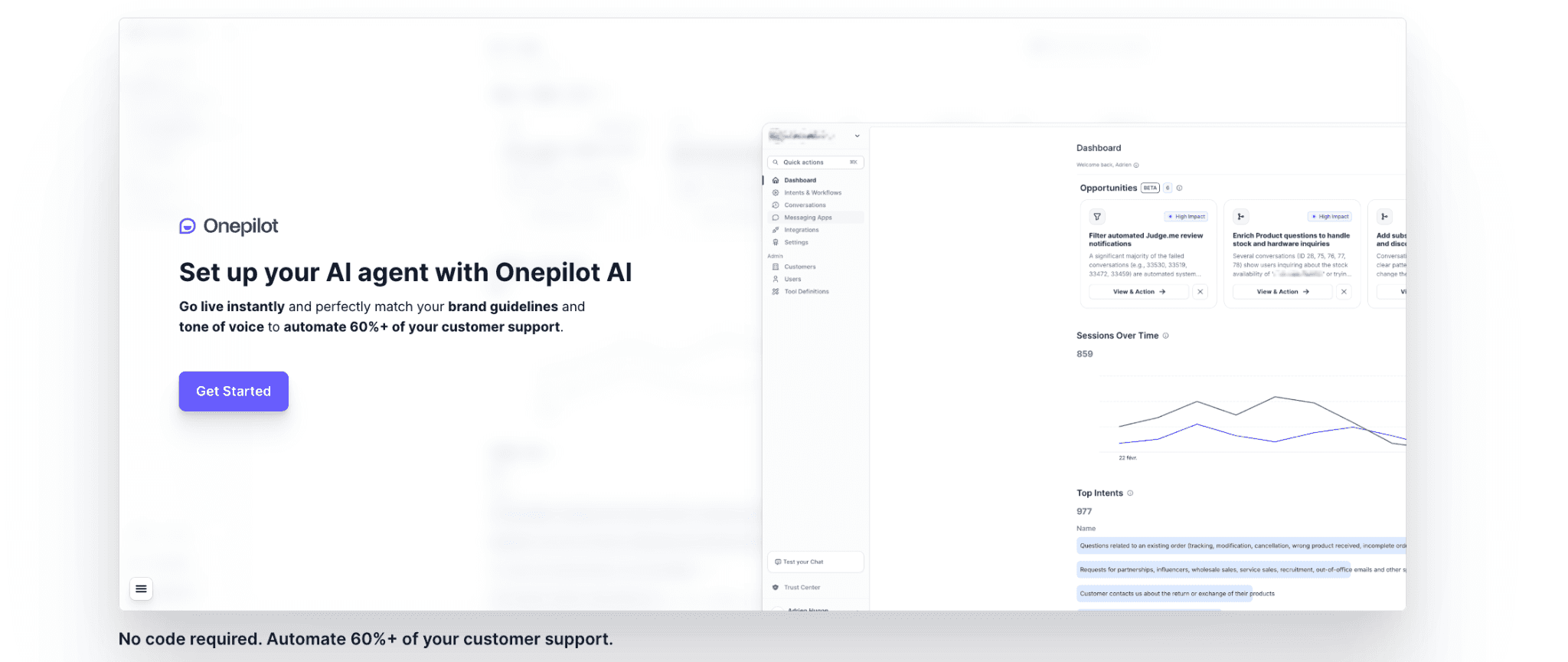
The platform now integrates a full automation layer that allows companies to:
create AI agents
deploy them
monitor their performance
Automation is deployed only when quality matches human performance on complex processes.
Launch your AI agent on Onepilot AI
Operations
Running global support operations requires operational excellence.
Onepilot focuses on building strong operational processes across:
workforce management
knowledge management
quality management
reporting
Today, we support 200+ customers and handle tens of millions of interactions each year across the world, building the foundations of a global player.
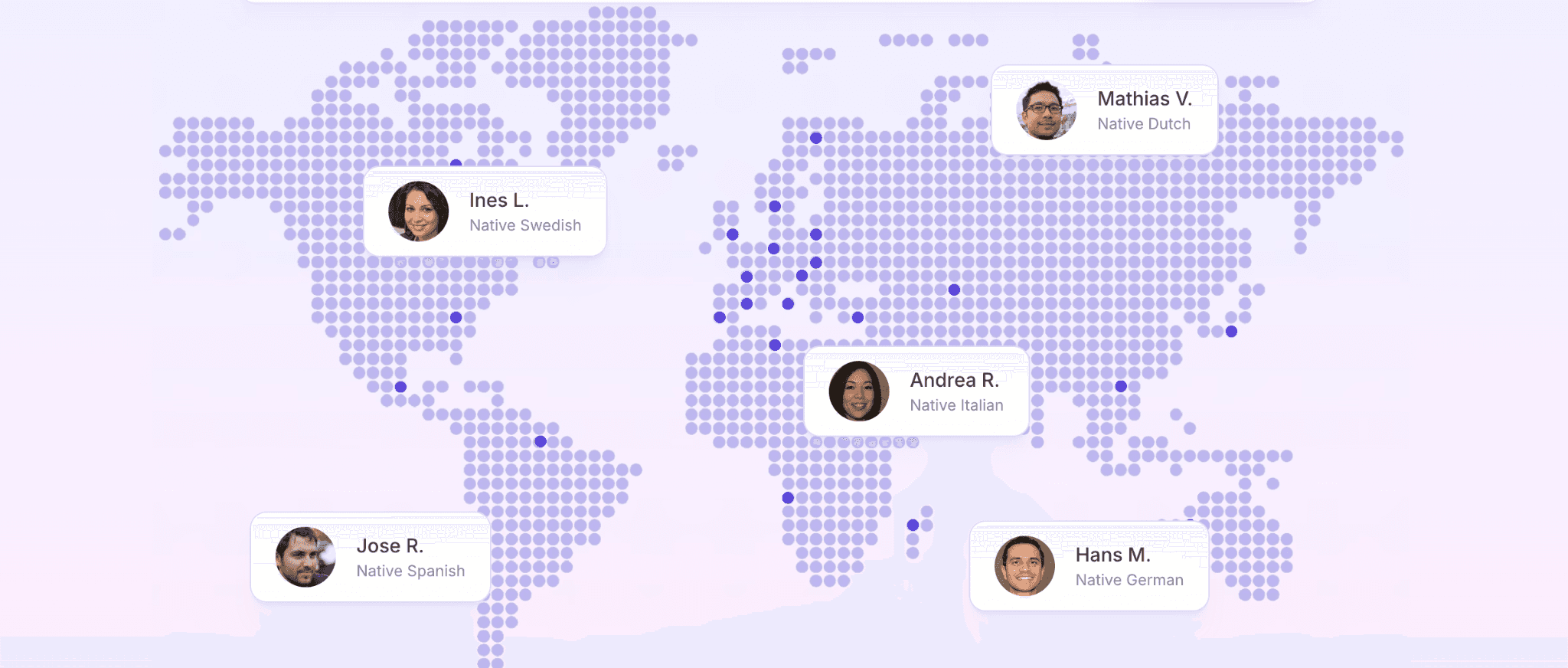
2.500+ human agents over the world
Strategic acquisitions
Strategic acquisitions can accelerate the development of this model.
We are primarily interested in two types of companies:
companies that strengthen our transformation capabilities (consulting, integration or operational expertise)
companies operating modern remote workforce models
The objective is not to build a larger traditional outsourcing company.
The objective is to build the platform that runs the next generation of customer support.
8. What comes next
Customer support is entering a structural transition.
Automation will reduce ticket volumes
Internal teams will become smaller.
Flexible global workforces will handle the remaining demand.
Our focus for the coming years is clear.
Grow the platform.
Increase the number of companies operating their support through Onepilot.
Accelerate automation.
Deploy AI agents across more processes and continuously improve automation rates.
Scale global operations.
Expand our distributed workforce and operational capabilities across more geographies and languages.
Strengthen the ecosystem.
Work with integrators and partners who already help companies transform their support operations.
And when it makes sense, accelerate this transition through strategic acquisitions.
Customer support is being rebuilt.
We started in 2021.
Five years later we reached:
200+ customers
€30M+ annual revenue
strong profitability
And this transformation is only getting started.
Onepilot is building the system that powers the next generation of customer support.
One ticket at a time.
One project at a time.
Rester informé avec les derniers guides et actualités.